
Field notes ·
Is Water Damage Worth Fixing on an Older RV? A Straight-Talk Guide
Finding water damage in an older RV raises a hard question: repair it, or move on? Here's how to think it through with facts instead of guesses.
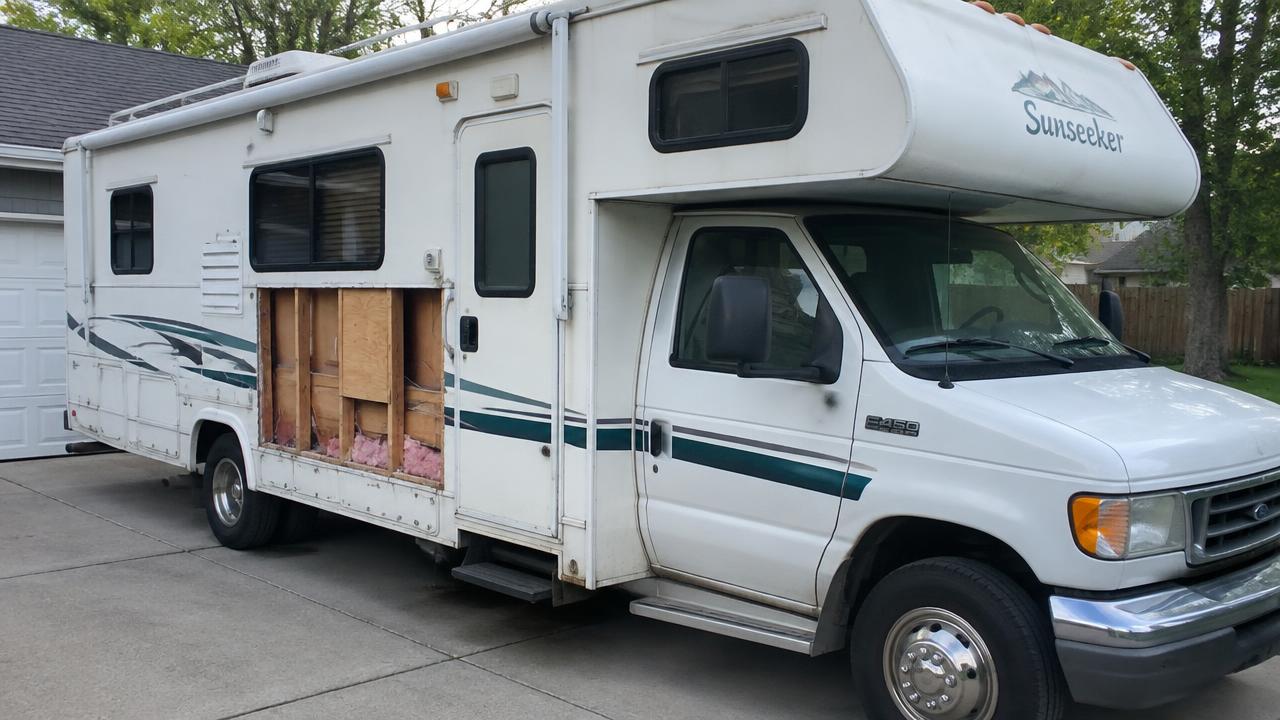
You found a soft spot, a stained ceiling or a wall that's started to bubble, and your RV isn't new. The first question most owners ask is: is this even worth fixing? It's a fair question, and the honest answer is that it depends. Not on the RV's age alone, but on how far the damage goes, what condition the rest of the RV is in and what the RV is worth to you.
Here's how to work through that decision with real information instead of guesswork.
Step 1: Find out how far the damage really goes
Everything depends on this. A stain on the ceiling might be a small, contained area near one vent, or it might be the visible edge of damage that runs across the roof structure. A soft spot in the floor might be a few square feet or the entire front of the coach.
You can't tell from the surface. What helps:
- Moisture readings mapped across the affected area and beyond it, to find where the damage stops.
- Inspection of the source: which seal, seam, fixture or plumbing connection let the water in.
- A look at structure: framing, the frame-to-floor connection and, for floors, the underside.
- Checking related areas: a roof leak can affect walls and floors below it.
A thorough inspection before deciding is the single most useful step. Our water damage restoration work always starts by tracing the source and mapping the damage.
Step 2: Understand what drives the repair scope
Without quoting numbers, these are the factors that make a repair bigger or smaller:
- Size of the affected area. More square feet of damaged material means more to remove and rebuild.
- How deep it goes. Surface panels are simpler than subfloor; subfloor is simpler than framing and frame connections.
- Location. Areas with cabinets, fixtures or slide mechanisms on top take more work to access.
- Access. Some areas can be reached from inside; others require removing exterior skin or working underneath.
- Number of sources. One leak is simpler than several.
- Finish matching. Older RVs can have panels and coverings that are hard to match exactly.
Step 3: Look at the RV as a whole
A repair makes the most sense when the rest of the RV is in good shape. Ask yourself:
- Are the chassis, engine (for motorhomes), axles and tires sound?
- Do the major systems work: electrical, plumbing, appliances, slides?
- Is the damage isolated, or are there signs of water in several places?
- Do you like this RV, its layout and how it fits your travel?
An older RV with a solid chassis, working systems and one contained leak is often a very good candidate for repair. An RV with widespread damage on top of mechanical problems is a harder call.
Can an RV with a rotted floor be saved?
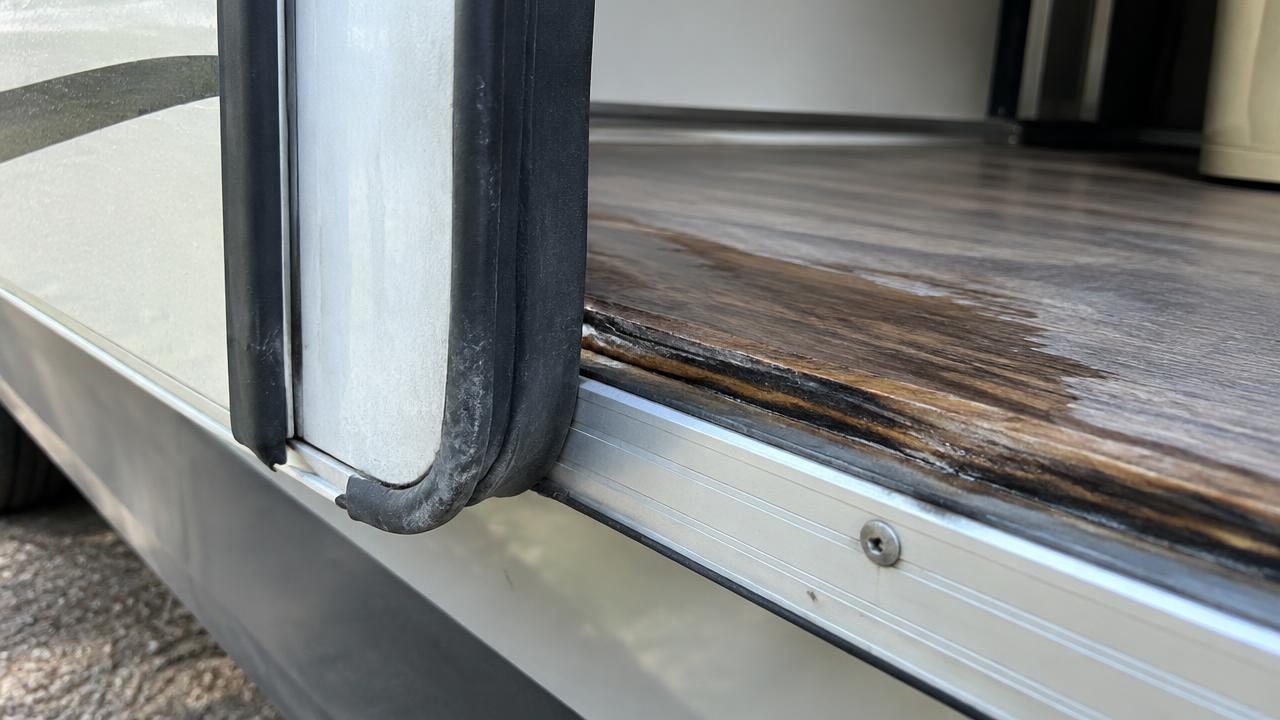
Often, yes. Floors are built in layers, and damaged subfloor can be removed and rebuilt, with the frame-to-floor connection repaired, as long as the frame underneath is sound. That's the focus of our structural floor and subfloor repair. The key is cutting back to solid material and fixing the source so the new floor stays dry.
Why waiting usually costs more
When you're unsure about a repair, it's tempting to wait and see. With water damage, waiting almost always makes the decision harder. As long as water keeps getting in, the damaged area grows: a few square feet of soft subfloor becomes a larger section, rot reaches framing that was sound last season, and wall delamination spreads across more of the panel.
Even if you're not ready to commit to a full repair, stopping the water is worth doing right away. Resealing the entry point or covering a damaged fixture keeps the damage from growing while you decide. That protects your options, whether you end up repairing, selling or trading the RV.
It also helps to document what you see now. Photos of stains, soft spots and wall bubbles, with dates, make it easier to tell whether things are getting worse and give a technician useful history when they inspect.
When repair usually makes sense
- The damage is contained and the source can be found and fixed.
- The structure underneath is sound or can be repaired.
- The rest of the RV is in good condition.
- You plan to keep using the RV.
Many owners also find value in what they already know about their RV: how it drives, how it's been cared for, and how the layout fits the way they travel. A trusted RV with one fixable problem is often a better bet than an unknown replacement that may carry its own hidden issues.
When to think harder
- Damage appears in multiple areas with multiple sources.
- Frame members are badly compromised.
- The RV also needs major mechanical work.
- You were already planning to replace it soon.
Questions to ask before approving a repair
- Where exactly is the water coming from, and how will it be sealed?
- How far does the damage go, and how was that determined?
- What will be removed, and what will it be rebuilt with?
- Will the frame or frame-to-floor connection be checked and repaired if needed?
- Will I get photos of the damage and each stage of the repair?
- What happens if more damage is found once things are opened up?
Good answers to these questions tell you a repair is being planned properly. You deserve straight answers, including when a repair doesn't make sense. If you have water damage on an older RV in the Seattle or Dallas–Fort Worth area, request service and we'll give you an honest look at what it needs.
Seeing any of this on your RV?
We come to your RV in the Seattle and Dallas–Fort Worth areas, find the source and fix it to last.
Article FAQ
Quick answers
Through inspection and moisture readings mapped across and beyond the visible damage, plus finding the source. The surface rarely shows the full extent.
Often, yes, as long as the frame underneath is sound or repairable. Damaged subfloor is removed back to solid material and rebuilt, and the water source is fixed.
Ask where the water is coming from and how it will be sealed, how far the damage goes, what will be rebuilt with what, whether the frame is checked, and whether you'll get photos of each stage.