
Field notes ·
Pacific Northwest Rain Season: How to Keep Water Out of a Parked RV
From October to April, steady rain tests every seam on a parked RV. Here's a monthly routine that catches small gaps before they become soft floors.
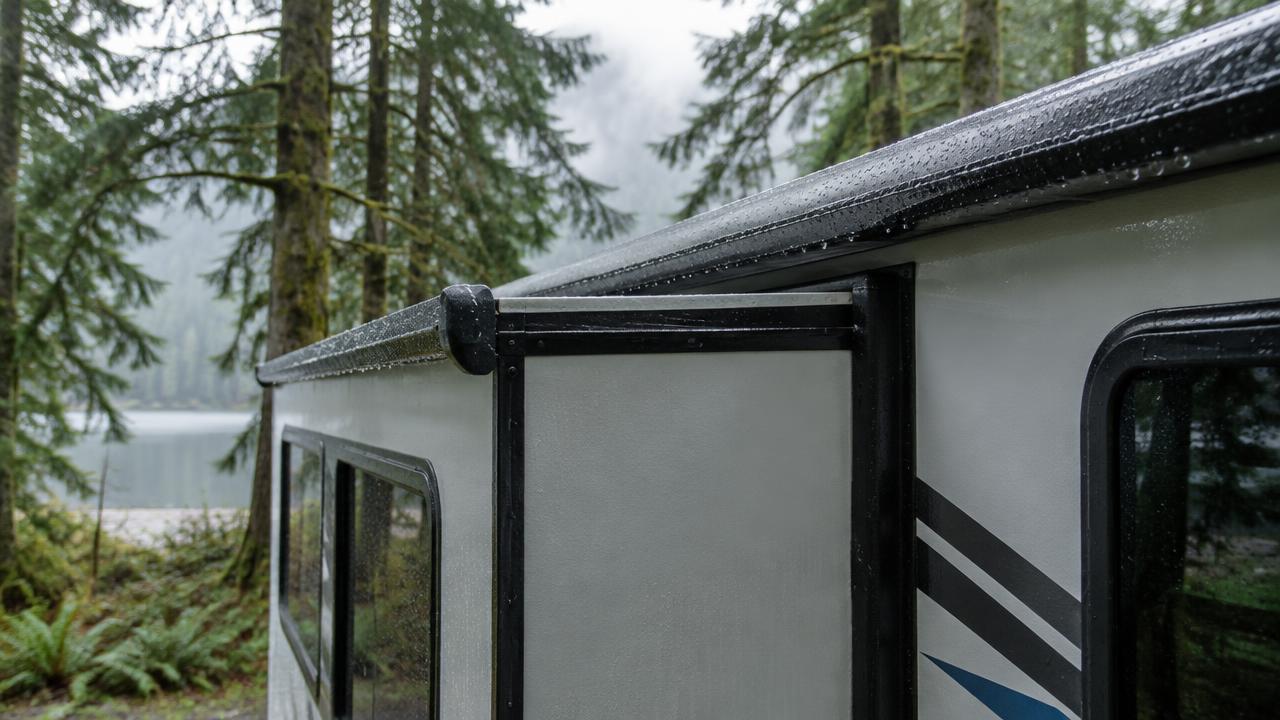
If you live around Seattle, you already know the pattern. Sometime in October the rain settles in, and it rarely leaves for long until spring. For a house, that's just weather. For a parked RV, it's six months of slow, steady pressure on every seal, seam and fastener on the coach.
The problem isn't usually one dramatic storm. It's the long stretch of drizzle and damp air with almost no chance to dry out. A hairline crack in roof sealant that would stay dry in a sunny climate can let in a few drops a day here, every day, for months. By March, those drops have become a stained ceiling, a soft slide floor or a wall that's started to bubble.
The good news is that most of this is preventable with a simple routine. You don't need special tools, just a ladder you trust, a flashlight and about thirty minutes once a month.
Before the rain starts: a fall baseline
Do one careful walk-around in late September or early October, while the RV is still dry. This gives you a baseline to compare against all winter.
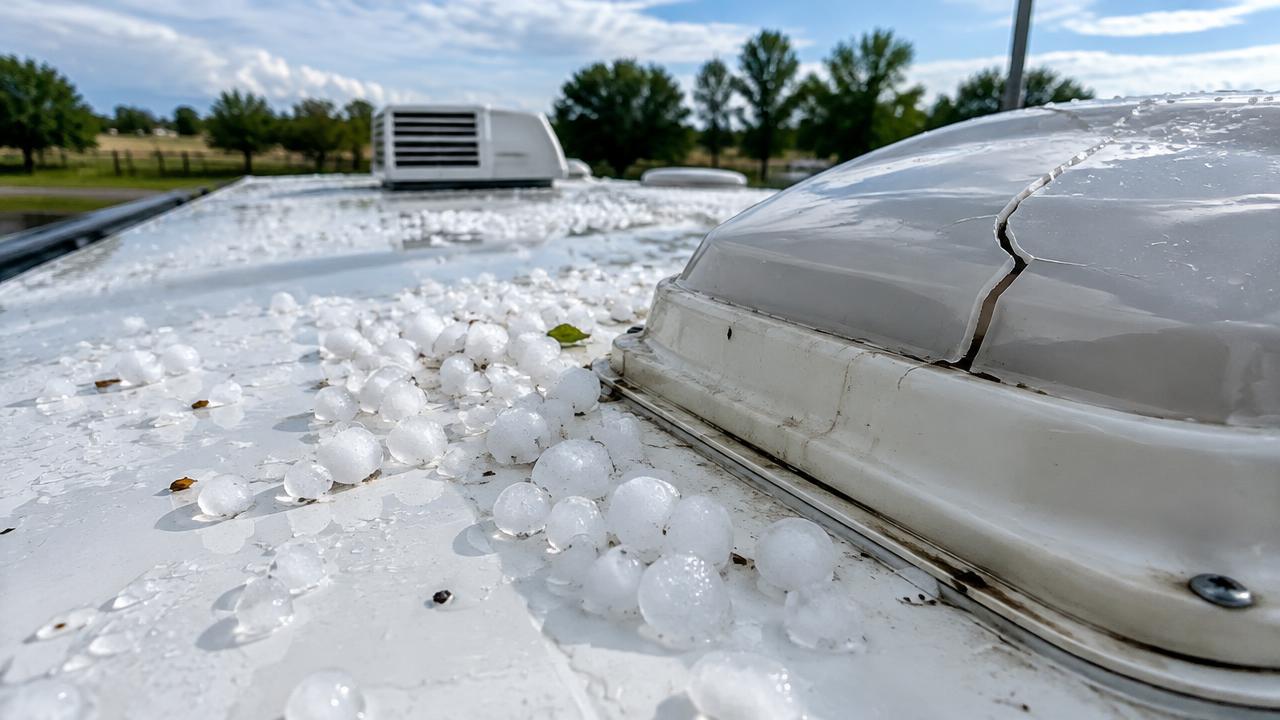
- Get up on the roof (only if it's rated to walk on and you can do it safely) and look at every place something passes through: vents, skylights, the AC unit, antennas, solar mounts and plumbing stacks.
- Look closely at the sealant around each one. You're looking for cracks, gaps, edges that lift when you press them, or areas where the sealant has shrunk away from the fixture.
- Check the seams where the roof meets the front cap, the rear cap and the sidewalls. These flex the most and fail often.
- Walk around the RV and look at window frames, marker lights, exterior lights, compartment doors and the trim along the roof line.
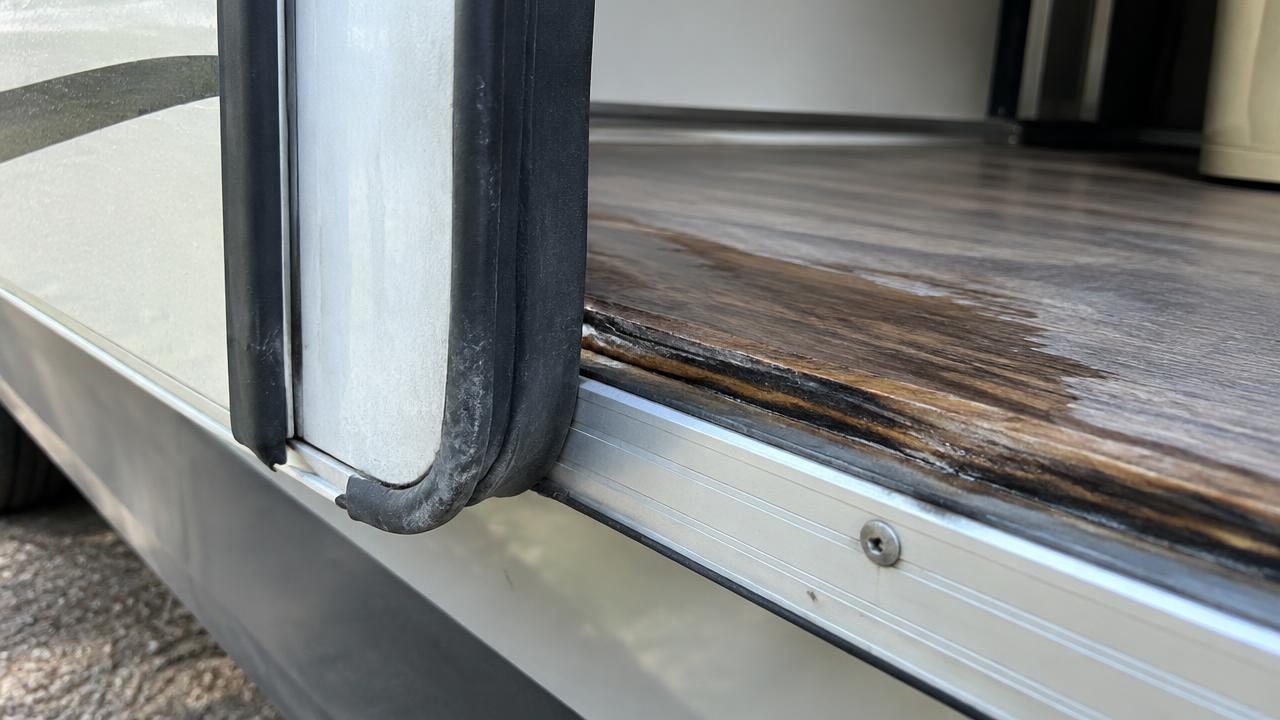
- Run each slide out and look at the seals and wipers along the top, sides and bottom. Flattened, torn or hardened rubber won't keep water out.
- Take photos of anything that looks questionable so you can compare later.
If you find cracked or lifting sealant, fix it before the wet season or have it done. Sealing over failed sealant rarely holds; the old material needs to come off so the new bead bonds to a clean surface. Our roof and leak repair visits handle exactly this.
The monthly check: thirty minutes that pay off
Once the rain arrives, a short monthly visit to the RV catches problems while they're still small. If your RV is in a storage lot, this is worth the drive.
- Open the door and use your nose first. A new musty or earthy smell is often the first sign that water is getting in somewhere.
- Look at the ceiling near every roof fixture, especially around vents and the AC. Fresh stains, rings or sagging panels mean water is getting past the roof.
- Open upper cabinets on outside walls and look at the back corners for staining or dampness.
- Press on the floor near the slide-outs and in front of the entry door. Any new softness deserves attention.
- Look at the outside walls in low-angle light. New waves or bubbles in the fiberglass can mean water is getting between the wall layers.
- Check that the roof is clear of needles, leaves and branches, which hold moisture against seams.
Keeping the inside dry
Even a perfectly sealed RV collects moisture inside during a Northwest winter. Warm, damp air condenses on cold windows and walls, and closed cabinets trap it. Over time, that can lead to mildew and musty smells even without a leak.
- Crack a roof vent with a rain-proof vent cover so air can move without letting rain in.
- Use moisture absorbers inside, and empty or replace them on your monthly visit.
- Leave cabinet and closet doors slightly open so air can circulate.
- If you have power at the storage site, a small dehumidifier makes a big difference.
- Avoid plastic tarps directly over the RV. They trap moisture underneath and can rub sealant and paint.
Slides in, or slides out?
For long-term winter storage, slides are usually best kept in. A closed slide presents less roof and seam surface to the rain, and the seals stay compressed. If you must leave a slide out, a slide topper helps shed water, and you'll want to check the seals and the slide roof more often.
Slide floors deserve special attention in this climate. Their edges sit right against seals that hold water, and they're one of the first places rot starts. If you press near the outer lip of a slide floor and feel any give, have it checked. Catching it early can be the difference between a reseal and a full slide-out floor replacement.
When you find something
If you find a fresh stain, a soft spot or new bubbles in a wall, don't wait for spring. Water damage in a wet climate keeps growing through the season. Stop the source if you can: cover the area, bring in the slide, or put a temporary patch over a cracked vent. Then take photos and get it looked at.
Wall bubbles in particular tell you water has been inside the wall for a while. Our delamination repair starts by finding and sealing the water path, then dealing with the wall itself.
A wet winter doesn't have to mean a damaged RV. A fall baseline, a monthly check and quick action when something changes will keep most Northwest RVs dry until the sun comes back. If you'd like a second set of eyes before or during the season, you can request service and we'll come to wherever your RV is parked.
Seeing any of this on your RV?
We come to your RV in the Seattle and Dallas–Fort Worth areas, find the source and fix it to last.
Article FAQ
Quick answers
Once a month from the ground and inside the RV, and get on the roof (if it's safe and rated for walking) after any big windstorm or whenever you notice a new stain or smell inside.
A breathable RV cover can help, but avoid plastic tarps that trap moisture against the RV. Whatever you use, keep checking under it, since a cover can hide a problem.
Often a new musty smell, before you see anything. After that, look for small stains near roof fixtures, damp cabinet corners and soft floor edges near the slides.