
Field notes ·
Cover, Carport or Storage Lot: Which Keeps Your RV Driest?
Where and how you store your RV decides how much weather it faces. A practical comparison for both rainy Seattle and sun-baked Texas.
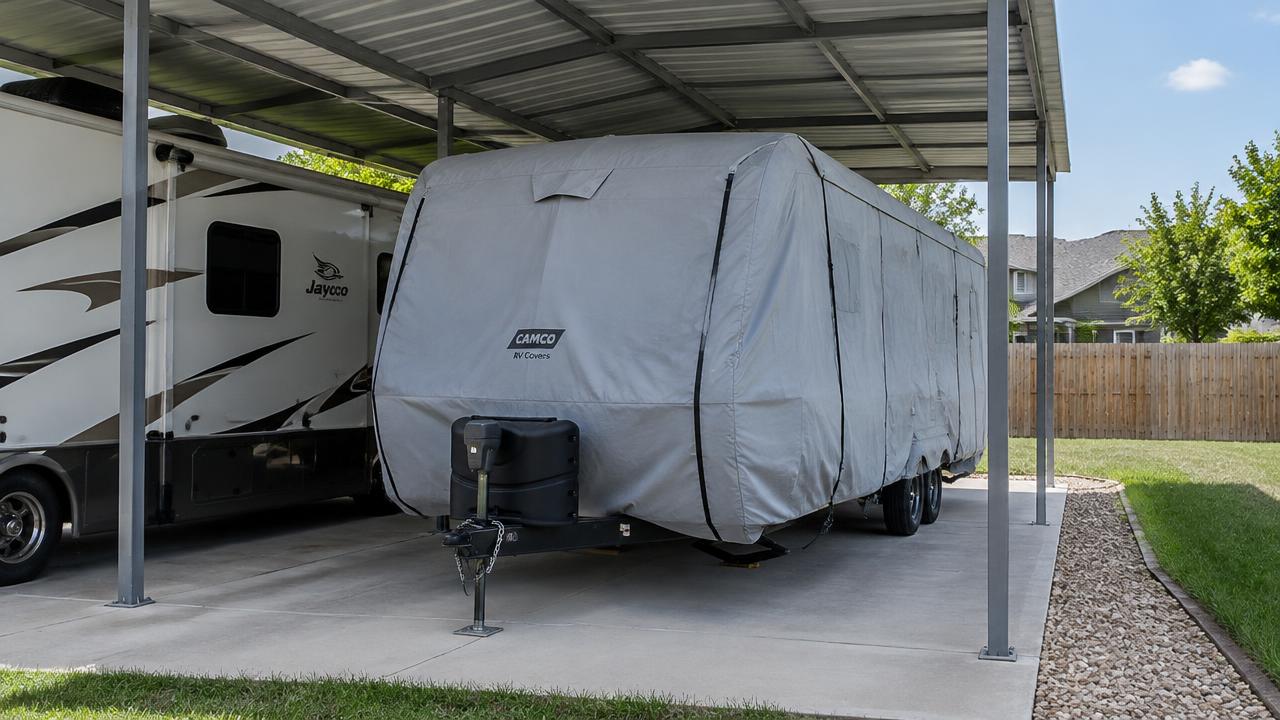
Most RVs spend far more time parked than traveling. That means storage decisions shape the condition of your RV as much as anything you do on the road. In the Seattle area, the enemy is months of rain and damp air. In Dallas–Fort Worth, it's intense sun, heat and hail. The right storage choice depends on which one you're fighting, and on what you can realistically do.
Here's a straightforward look at the common options and their trade-offs.
Option 1: An RV cover
A fitted, breathable RV cover is the most affordable way to add protection, and it works wherever the RV is parked.
- Good at: blocking UV, slowing sealant breakdown, keeping dirt and debris off the roof and reducing direct rain on seams.
- Watch out for: covers that aren't breathable trap moisture underneath. Loose covers flap in wind and can rub paint and sealant. Covers can also hide developing problems, since you don't see the roof or walls day to day.
- Best practice: choose a cover made for RVs and sized to yours, secure it well, and still lift it periodically to inspect the roof and walls.
A plain plastic tarp is not the same thing. Tarps trap moisture against the RV and often do more harm than good over a long wet season.
Option 2: A carport or covered pad
A carport, whether at home or as covered storage, puts a real roof over your RV's roof.
- Good at: keeping direct rain and sun off the roof, protecting against hail, and keeping the roof dry enough to inspect easily.
- Watch out for: open sides still let wind-driven rain reach the walls and slides. The carport itself needs to be tall and wide enough for slides, AC units and antennas. In wet climates, the ground underneath should drain well.
- Best practice: check that the RV is level under the carport so water doesn't pool on the roof or slide toppers, and keep an eye on walls and slides on the exposed sides.
Option 3: An open storage lot
Open lots are common and convenient, especially for owners whose HOAs don't allow RVs at home.
- Good at: giving you a secure place to park when home isn't an option.
- Watch out for: full exposure to rain, sun, wind and hail, and the RV often goes long stretches without anyone looking inside.
- Best practice: combine an open lot with a breathable cover, regular visits and a pre-season roof and seal check.
Option 4: Fully enclosed storage
Indoor storage offers the most protection from weather, but it's usually the most expensive and hardest to find in a size that fits large RVs.
- Good at: protecting against rain, sun and hail almost completely.
- Watch out for: humidity can still build up inside the RV, especially in a damp climate. Pests can find their way in.
- Best practice: keep some airflow inside the RV, use moisture absorbers and still check in periodically.
Seattle rain vs. Texas sun: different priorities
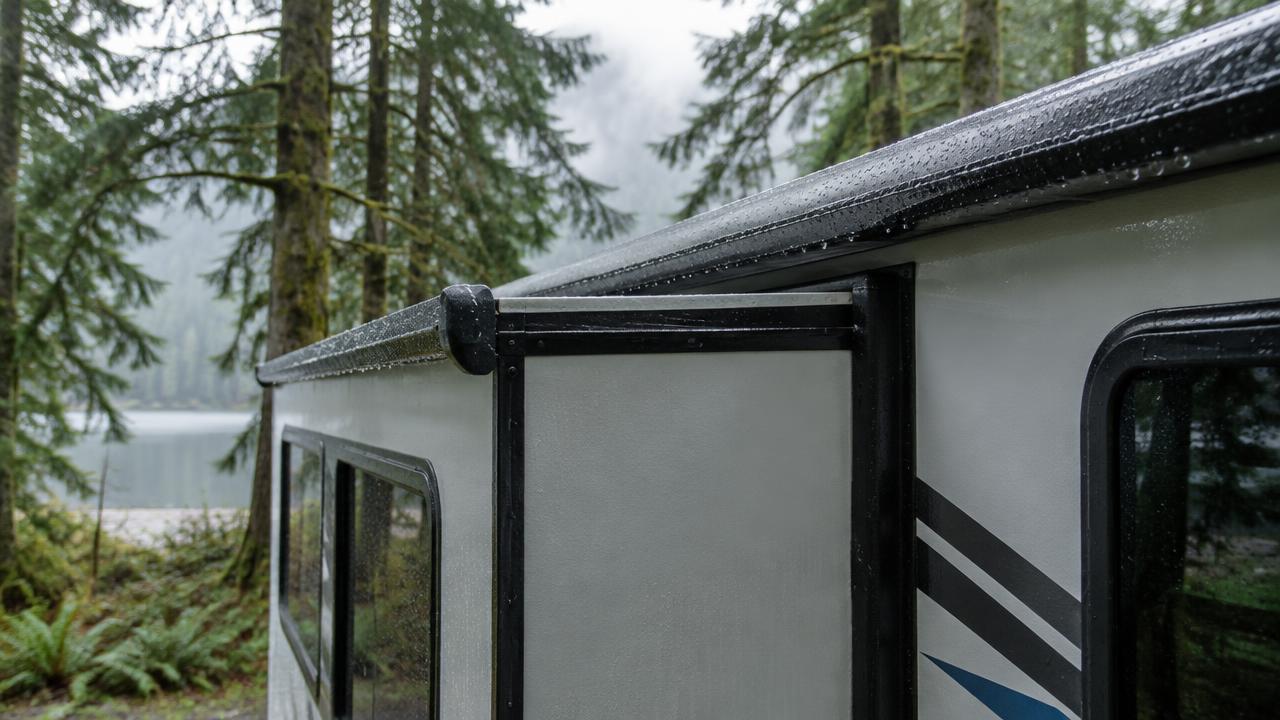
The best choice depends on which weather you're fighting. In the Seattle area, the main threat is long stretches of rain and damp air. That makes keeping water off the roof and allowing airflow the priorities. A carport or covered storage does the most good, and a breathable cover works well in open storage as long as you lift it to check underneath. Avoid anything that traps moisture, and plan on interior airflow and moisture absorbers no matter where the RV sits.
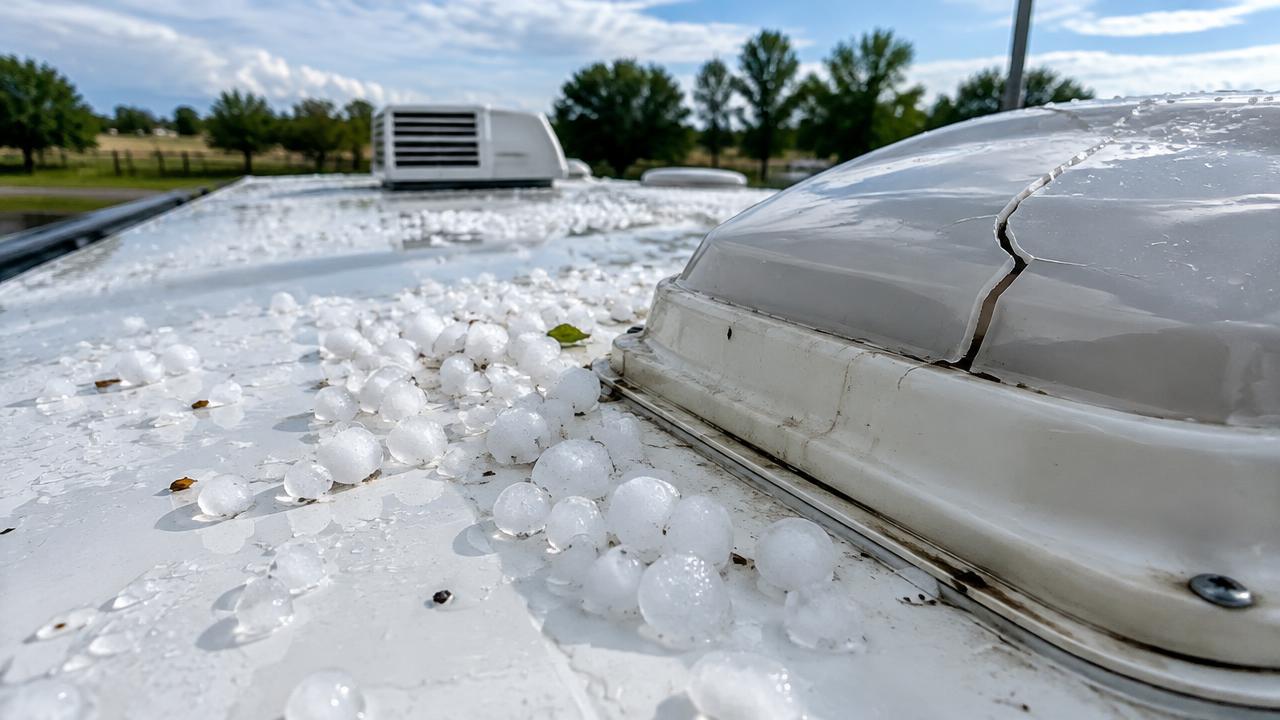
In Dallas–Fort Worth, the threats are intense sun, heat and hail. Sun breaks down sealant, rubber seals and plastic vent covers over time, and hail can damage a roof in minutes. Here, a solid roof overhead is the biggest upgrade, because it protects against both sun and hail. A quality cover helps with sun in open storage, but it won't stop hail. Heat inside a closed RV also matters, so some ventilation helps protect interior materials.
If you split time between climates or travel often, think about where the RV spends most of its parked time, and plan storage around that.
What no storage option can do
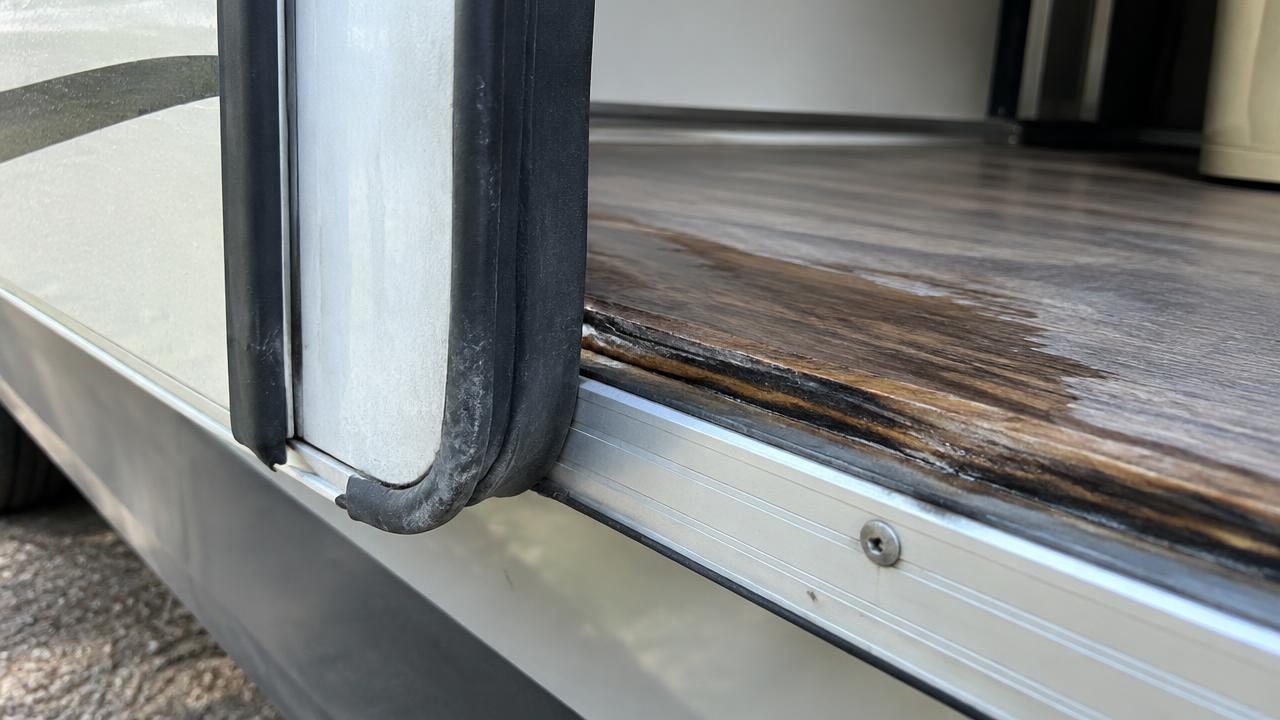
Even the best storage doesn't fix problems that already exist. If roof sealant is cracked, a carport slows the damage but doesn't stop condensation or wind-driven rain from finding the gap. If a slide seal is worn, a cover doesn't seal it. And no storage option stops moisture that's already inside a wall from spreading.
That's why storage works best as one part of a plan, along with seasonal checks of the roof and seals and quick action when something changes. Our roof and leak repair service handles pre-storage resealing, and if walls have already started to bubble, delamination repair addresses the source and the wall.
Think of storage as slowing the clock, not stopping it. Even a well-stored RV needs someone to look at it every few weeks, notice changes and act on them while they're still small.
Before long-term storage: a short checklist
- Inspect and reseal roof fixtures and seams as needed.
- Check and condition slide seals; bring slides in.
- Clean the RV inside and out, and remove food.
- Set up airflow: a covered vent cracked open and cabinet doors slightly open.
- Place moisture absorbers inside.
- Take photos of the roof, walls and ceilings so you can compare when you return.
Whatever storage you choose, a dry RV starts with a sound roof and seals. If you'd like a pre-storage check in the Seattle or Dallas–Fort Worth area, request service and we'll come to your RV.
Seeing any of this on your RV?
We come to your RV in the Seattle and Dallas–Fort Worth areas, find the source and fix it to last.
Article FAQ
Quick answers
Yes, if it isn't breathable or fits poorly. Plastic tarps are the worst offenders. A breathable cover made for RVs, secured well and lifted periodically for inspection, avoids most of the problem.
For many owners, yes. Covered storage reduces sun damage to sealant and gives real protection from hail, which are the two biggest roof threats in North Texas.
Reseal any failing roof sealant, condition slide seals and bring slides in, clean out the RV, set up airflow and moisture absorbers and take photos so you can spot changes later.